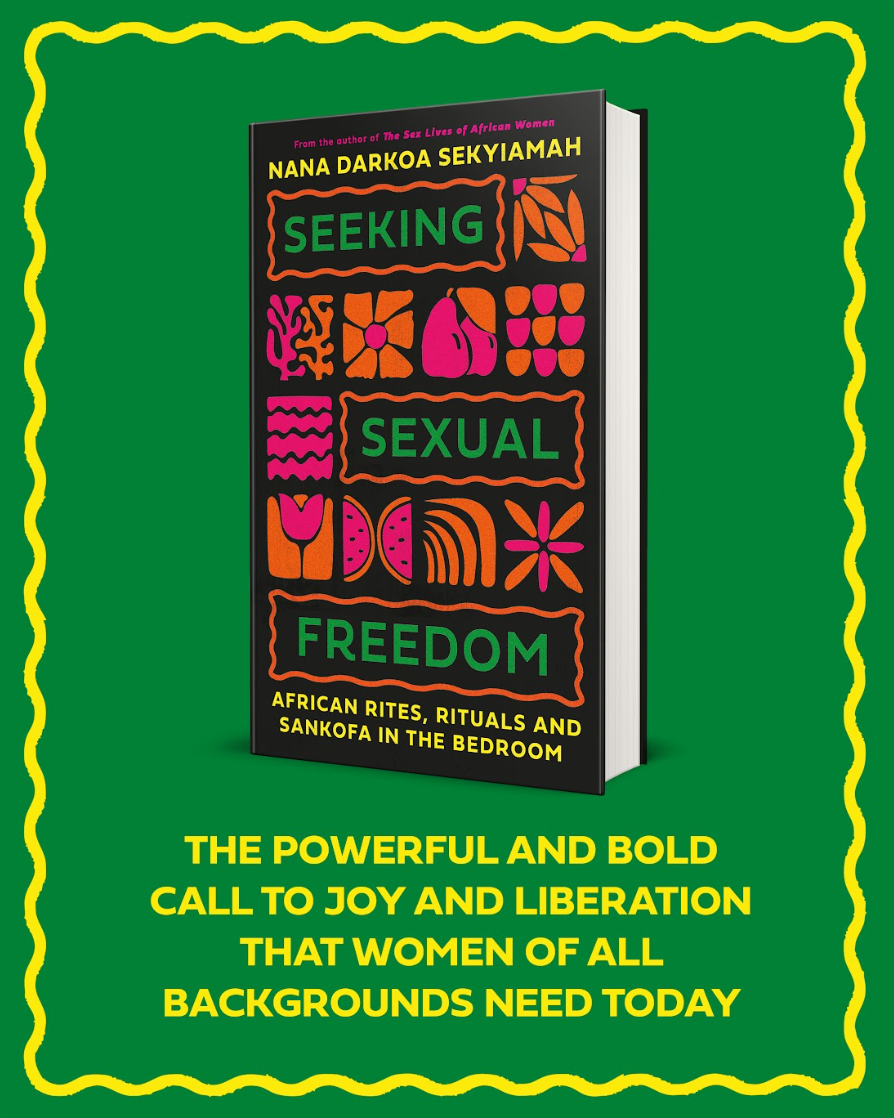
In researching my book Seeking Sexual Freedom, I was struck by the contrast between the expansive ways our ancestors understood gender, sexuality and intimacy, and the growing restrictions being shaped today by religious fundamentalism, patriarchy and political power.
I think of these restrictions – often described as a “backlash” – as an interruption.
Across the continent, we have centuries of knowledge that speak to fluidity in our gods and goddesses, and to a multiplicity of family structures and ways of being. The current moment – marked by rising homophobia and the rollback of progressive rights across Africa and beyond – sits uneasily against that longer history.
But interruptions are not the whole story. The power of people – feminists and queer movements – is also co-creating, building and dreaming new worlds where we can all be free.
The extract below explores that tension.
Take the Xaxars in Senegal – a community gathering that, in the past, would have been joyously explicit, obscene even, as women, men, and children sang about sexual acts that they would want to experience with their betrothed. Those traditional spaces provided opportunities to learn about sex and to celebrate the pleasure and joy of it. At the time, discussions about sex and sexuality happened in the open, to the chants of the bongo man, and with the participation of entire communities, whether people were married or not.
But, like many other African countries, Senegal has become increasingly religious and conservative. Muslim leaders have denounced Xaxars, and so now, as my Senegalese friend Hawa explained, even when these gatherings do happen, they are a much tamer version of what our ancestors experienced. They now occur post-consummation of the marriage, thereby nullifying the spirit and power in speaking openly, honestly, and explicitly before sex is presumed to have taken place.
That sense of freedom afforded by sexual knowledge was interrupted by the triple forces of colonisation, racism, and patriarchy. While I am buoyed by knowing that traditional African systems of knowledge, and many indigenous rites, rituals, and traditions still exist—and are being practised in the here and now – I wanted to explore how they have been irrevocably changed and transformed by systemic racist hetero-patriarchy.
My soul is lifted by knowing how, as a people, we have survived colonialism. Afro-descendants in the Diaspora have also preserved within their very beings ancient African knowledge and practices, in spite of centuries of enslavement and forced migration across the Atlantic and beyond. This became clear to me during my time in Bahia – seeing familiar foods sold on the street corners, being in the Candomblé temple and seeing people fall into trance, much like they do at traditional religious events across the African continent.
The concept of sankofa reminds us that we can always return to the source. Going back does not mean returning to a mythical, imagined Utopia. It means a return to those aspects of our histories that best serve us, and in the context of African and Black sexualities, it means a return to the creation of intentional space to talk openly, honestly, even obscenely about sex and sexualities in all their diversity.
Going back does not mean returning to a mythical, imagined Utopia. It means a return to those aspects of our histories that best serve us
On the African continent today, 31 countries out of 54 have banned consensual same-sex relationships, over 50% of the population describes themselves as Christian, and just over 30% identify as Muslim.
This high level of religiosity in and of itself is not inherently bad, but it becomes a problem when conservative religious leaders wield formidable political power and threaten politicians, forcing them to pass legislation that restricts the autonomy of women over their own bodies, or advocate against the passage of bills that are fundamental for women’s reproductive health.
My first visit to Sierra Leone was in 2022. I had been invited to be a keynote speaker at the 10th All Africa Conference on Sexual Health and Reproductive Rights. One of the special guests was President Julius Maada Bio. When he addressed the gathering of activists, civil society leaders, and policymakers, he stated, “My government has unanimously approved a safe motherhood bill. This bill will include a range of critical provisions to ensure the health and dignity of all girls and women of reproductive age in this country.”
The hall in which we stood when the president made his announcement erupted into loud applause at his words, and in that moment it felt like we were winning. We the activists, we the feminists, we the people who want girls and women to live boldly and not die from backstreet abortions or as a result of female genital mutilation. We were invigorated by how boldly the president had made this announcement. He had stated categorically that this was a unanimous decision of his government. Later I shook the president’s hand when he attended a private dinner with a number of the conference speakers. I wondered quietly if he was the real deal, an African leader who would stand up for the rights of girls and women. The Sierra Leonean activists in the room had felt hopeful; it had been a long road to get to the stage where the long-fought bill had presidential approval.
However, when I returned to the country three years later, the bill had still not been passed. Sierra Leonean feminists informed me that this was because of lobbying by far-right religious extremists, who were part of a coalition called the Inter-Religious Council of Sierra Leone.
Although the president was firmly in favour of passing the bill, its passage was still up in the air, like a ball held in suspense by forces of hate. In a context where even presidents cannot get legislation passed, you know we are in deep trouble. This trouble is not limited to Sierra Leone.
I see the same politics play out in my own country, Ghana, where religious leaders are mobilising with politicians to pass an anti-gay bill. The religious fervour that drives the bid to control women’s bodies is on the same spectrum as the hate that Queer people across Africa face.
On the African continent today, to the detriment of universal human rights, extreme religiosity now drives the political agenda in countries that are supposedly secular. The roots of the religiosity that shape much of politics in Africa today are in colonisation.
Colonialism did not only force new laws on Africans, it reshaped social and cultural norms. In the case of Christianity, the religious tradition that I am most familiar with, missionaries came carrying the Bible in one hand while clearing the path for military operations and the takeover of land, minerals, and wealth with the other.
Colonialism did not only force new laws on Africans, it reshaped social and cultural norms.
In former British colonies, like my own country, they did this while also promoting Victorian notions of respectability and demonising African traditional religions. Africans did not just give in to these assaults on their culture and way of life. There were many fierce battles between the colonisers and the Indigenous people of the land they sought to conquer.
The legendary queen mother Yaa Asantewaa, who led the last war between the Asante and the British in 1900, is famous for having said, “If you, the men of Asante, will not go forward, then we will. I shall call upon my fellow women. We will fight the white men. We will fight till the last of us falls on the battlefield.”
Today, the fight against colonisation is not just physical, it’s cultural. It’s about going back to being a society that is truly tolerant of all religions, including African traditional religions, and respecting the rights of Africans who have no particular faith.
Resisting colonisation is also about recognising that the majority of Africans desire to live under civil, not religious, law.
Resisting colonisation is not just about fighting the physical assault of colonising and neo-colonising forces, but resisting its more insidious elements, which includes the centuries of messaging we have been fed about the inferiority of Blackness. This requires a radical commitment to love ourselves as Africans, including a celebration of our physicality, those very features which racism told us were ugly, unattractive, and less-than.
Copyright © 2026 by Nana Darkoa Sekyiamah. From the book SEEKING SEXUAL FREEDOM by Nana Darkoa Sekyiamah, published by One Signal/Atria, an Imprint of Simon & Schuster, Inc and Dialogue Books, an imprint of John Murray Group. Printed by permission.