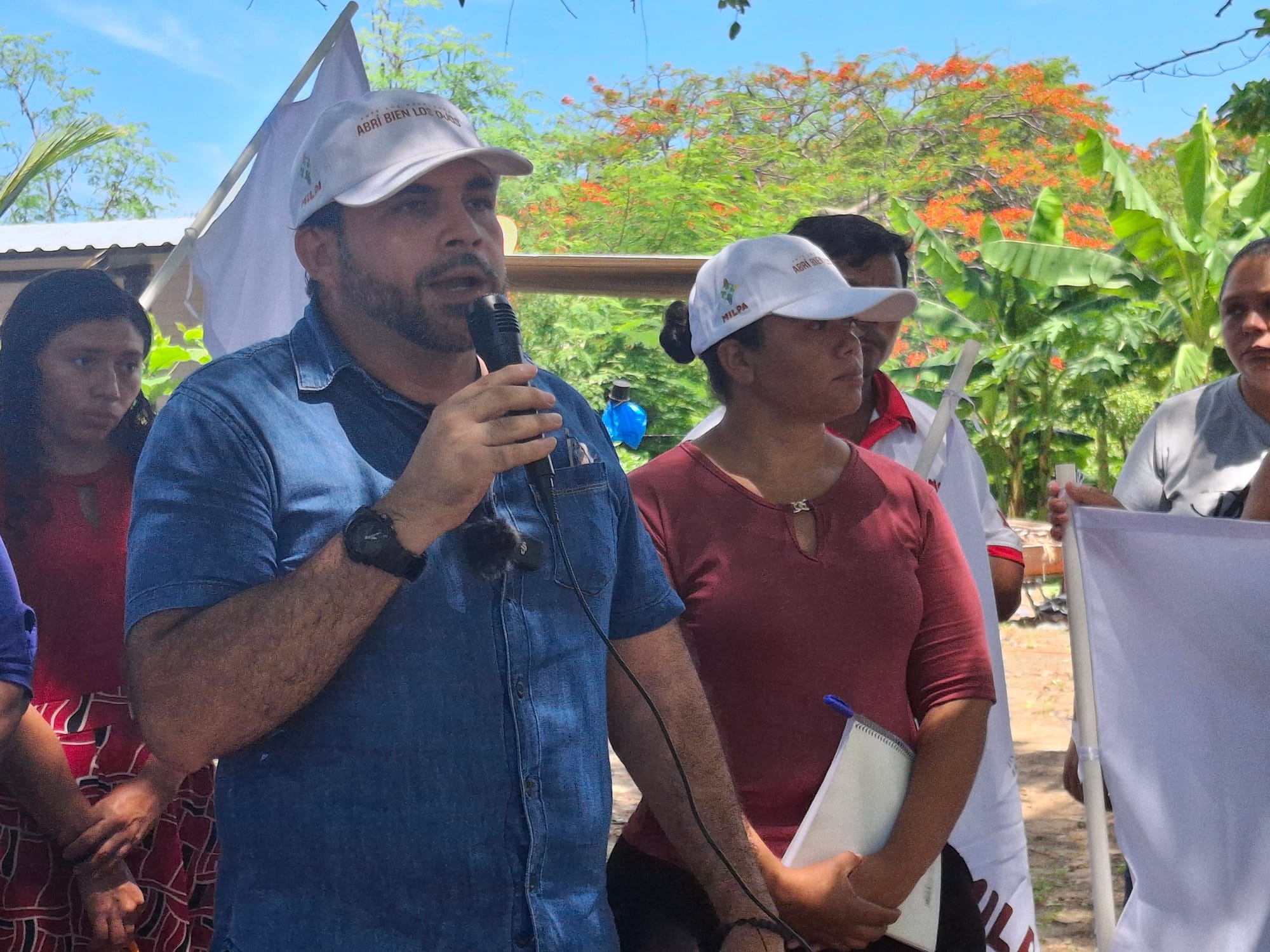
“The best-case scenario is that the state captures me,” says Ángel Flores, the regional coordinator of the Indigenous Movement for the Articulation of the Struggles of the Ancestral Peoples (MILPA), one of the most vocal organisations against state mega-projects in El Salvador.
It would not be the first time MILPA’s members had been detained under El Salvador’s state of emergency, which has suspended constitutional rights and allowed police to arrest people without a judicial warrant. President Nayib Bukele’s government initially introduced the measure in 2022 after a spike in gang-related homicides. At the time, it was supposed to last 30 days, but last month entered its fourth year, having been extended dozens of times.
In this article, some of the hundreds of journalists and defenders of human and land rights have told us how their lives have changed since the state of emergency was introduced. Some remain in El Salvador, defiant in their resistance despite fearing for their and their families’ lives amid state-led persecution. Others have been forced to flee the country, fearing detention, being disappeared, or even death.
The state of emergency is just one of the many ways Bukele has tightened his grip on power by eroding democracy and the rule of law since his 2019 election. His government has passed reforms that include abolishing presidential time limits to allow him to repeatedly run for re-election, installing loyalists in courts, including the Supreme Court’s Constitutional Chamber, and introducing measures to fast-track amendments through Parliament.
In June 2023, one of MILPA’s founders, fisherman Óscar René Martínez Iglesias, was accused of gang membership and prosecuted. Martínez Iglesias has been a vocal supporter of the local communities facing displacement for the construction of the planned Pacific Airport in La Unión, in eastern El Salvador, who have repeatedly raised questions about their homes, crops, water and state compensation.
Bukele's government denies any forced evictions, insisting land transfers were voluntary and negotiated. However, residents report protests over displacement and say compensation has been minimal and imposed rather than agreed upon.
The month after his arrest, the company Desarrollos Turísticos del Pacífico (Pacific Tourism Developments in English) began posting private property signs in mangrove areas of Icacal Beach, in Intipucá – an officially recognised Natural Protected Area in the east of the country – where community families live along the coast. The company is seeking to develop the beachfront for tourism.
To date, police have arrested six fishermen from the community, and five of them remain imprisoned. These men are among the 91,000 people arrested nationwide – more than 1.4% of the population – since 2022, according to official data.
Despite the ever-present threat of arrest, MILPA leader Flores keeps working on the lands he defends. “My personal position is not to leave the country, but to keep up the fight,” he says.
‘The iron fist’
Bukele has flatly denied his government represses or persecutes critical voices.
In September 2024, he told the UN: “In El Salvador, we do not imprison our opposition, we do not censor opinions, we do not confiscate the property of those who think differently, we do not arrest people for expressing their ideas.”
Yet last month, independent international experts warned the United Nations and the Inter-American Commission on Human Rights that the state of emergency imposed by his government has enabled arbitrary arrests, killings, torture, sexual violence, and forced disappearances that could constitute crimes against humanity.
The emergency measures were introduced after 87 people – largely ordinary civilians – were killed in one weekend in March 2022. While the government blamed the murders on rising gang violence, an investigation by local media outlet El Faro reported they were ordered by gang leaders after the alleged breakdown of a pact with the government, in which gang leaders received better prison conditions and financial benefits in exchange for lower homicide rates and electoral support. Bukele and his government have repeatedly denied the existence of such pacts.
Since then, the state of emergency has repeatedly been repeatedly renewed, and has led to more than 500 deaths in custody, more than 400 forced disappearances, and more than 800 cases of torture and ill-treatment, including beatings, electric shocks, sexual assault, forced nudity, and psychological violence, according to human rights organisations.
Others have been forced to flee. At least 130 Salvadoran human rights defenders and journalists are in exile, according to evidence submitted to the Inter-American Commission on Human Rights by rights organisations last year.
Yet as the arrests and exiles have spiralled, the president’s popularity has grown.
Bukele has benefited from the perceived security boost brought about by the state of emergency, which he credited with a 98% fall in the homicide rate between the mid-2010s and 2024. In reality, this decline is part of a trend that started before he was elected; the 2015 homicide rate had already been halved by the time he took office in 2019.
Still, the president has become an icon for thousands of Latin Americans calling for the implementation of the ‘Bukele model’ to tackle violence in their own countries, and other presidents in the region, such as Javier Milei in Argentina and Daniel Noboa in Ecuador, have also praised or imitated his “iron fist”.
Even US president Donald Trump has called Bukele “one of my favourite people” earlier this year, lavishing praise on his maximum-security prisons. Last year, Trump’s administration deported Venezuelan migrants to El Salvador’s Terrorism Confinement Center without any administrative or judicial proceedings or conviction.
‘The least we can do is not silence our voices’
Opposing mining in El Salvador means risking your life, says Vidalina Morales, the leader of the Asociación de Desarrollo Económico y Social (ADES).
In 2004, when Canadian mining company Pacific Rim sought to extract gold in Cabañas, in northern El Salvador, local communities resisted. By the end of 2009, three ADES environmental activists involved in the campaign against the mine had been killed: Marcelo Rivera, Ramiro Rivera and Dora Sorto, who was eight months pregnant. Their deaths, which involving torture and ambushes, were blamed on gangs and local hitmen. No arrests were ever made.
While Pacific Rim has strongly denied all involvement in the violence in Cabañas, public pressure in the wake of the deaths led the then government to reject the company’s mining permit – and after a long battle, ADES, alongside community organisations, churches and universities, spearheaded a grassroots movement that achieved something unprecedented. In 2017, El Salvador became the first country to ban metal mining due to its impact on its small territory of 21,000 square kilometres and on the Lempa River, which runs the length of the country, from the north to south.
Morales has been the most prominent female voice in the country’s anti-mining struggle and was among the first to raise the alarm about Bukele’s interest in reviving the industry. Having secured a second term in 2024, Bukele asked his legislators to overturn the law banning mining and draft one that would allow it. In December 2024, the ruling party fast-tracked a new legislation, which came into effect 15 days later.
"As long as there is injustice, I believe the least we can do is not silence our voices,” Morales says.
In January 2023, she did not hesitate to speak out on behalf of five environmental activists – ADES’ director, Teodoro Antonio Pacheco, its legal adviser, Saúl Agustín Rivas, and three leaders of the Santa Marta community in Cabañas – who were arrested and accused of murdering a woman in 1989, when they were guerrilla members fighting the Salvadoran army. A body was never found, and the case was based on the statement of a witness who denied having witnessed the crime.
Believing the group had been criminalised for defending the environment, Morales took on the role of spokesperson for ADES as the organisation’s president, leading protests and press conferences to denounce their arrests.
Then, on May 17, 2023, police arrested one of her sons under the state of emergency.
“When they arrested my son, those were the most difficult hours I have ever lived. What they were after was for me to stop speaking, to step back from the fight,” Morales says.
Human rights organisations say the criminal persecution of the family members of defenders and journalists is another form of state pressure: vicarious violence.
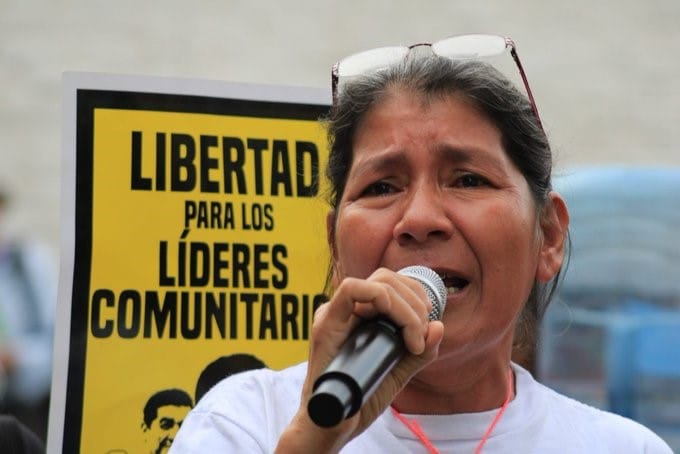
Although Morales’ son was released the following day after public pressure, the harassment did not stop. She reported being watched and followed in the street, people lurking around her home at night, unidentified individuals asking about her in the local communities and at the organisation’s offices.
None of it silenced her. In October 2024, a court acquitted the five Santa Marta environmentalists, but an appeals court ordered the trial to be repeated. This case was closed again in September 2025, absolving the five defendants, but their community fears the prosecutor office could insist on their retrial.
‘If they arrest me, they’ll let me die’
For 20 years, Malcolm Cartagena worked at the Supreme Electoral Tribunal, El Salvador’s highest electoral authority, which oversees all elections and settles disputes between political parties and allegations of electoral rights violations.
Most recently, Cartagena was an electoral trainer at the tribunal. He taught voting reception committees, police officers, prosecutors and staff from the Human Rights Ombudsman’s office how a democratic election day should run.
When Bukele pushed through reforms to merge municipalities, reduce the number of seats in the Legislative Assembly and change the method for allocating them, Cartagena was sure the 2024 elections would leave the country less democratic. And so it proved. That year’s presidential elections secured Bukele’s re-election – having amended the constitution to allow him to run again – and the parliamentary elections gave him a near-absolute majority in Congress, with 54 out of 60 MPs.
Cartagena became one of the key voices openly criticising these reforms, alongside Cristosal’s anti-corruption lawyer Ruth López, whom he had worked with years earlier at the start of his career, when they were both advisers to one of the tribunal’s justices, Eugenio Chicas. “She’s like my sister,” Cartagena says of López, who is a prominent human rights defender in El Salvador.
Both Cartagena and Lopez documented allegations of fraud put forward by the opposition, highlighted irregularities during the vote count, and offered their technical analysis.
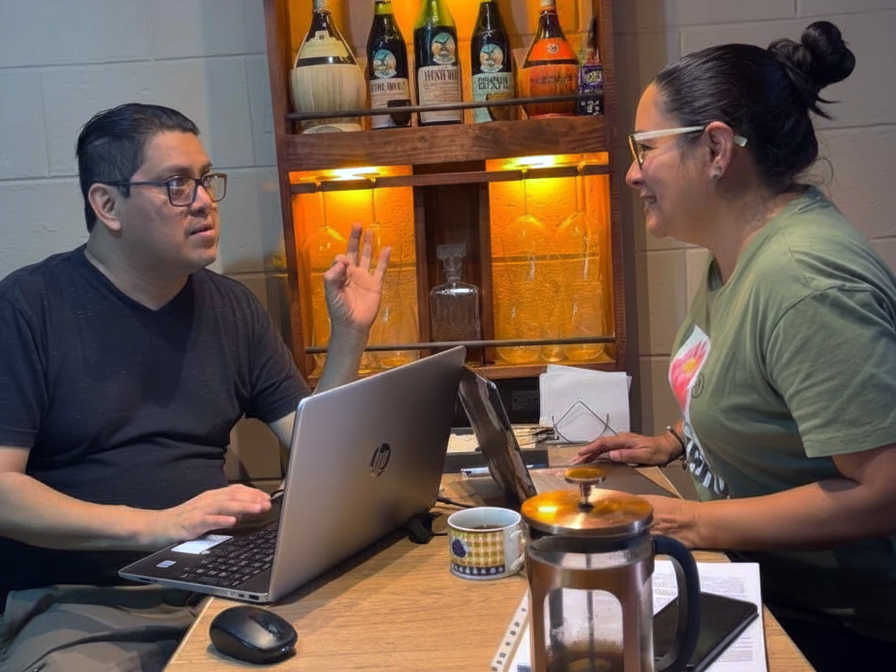
In February 2025, their former boss, Chicas, was detained. López knew the same fate could come for her. She told Cartagena so; they discussed it many times. But she had decided to stay in El Salvador. For Cartagena, the answer was more complicated: he suffers from severe chronic kidney failure and needs daily dialysis at home. If detained, he knew what could happen. “There are sick people who have died in state custody,” he says. “If they arrest me, they’ll let me die.”
When López was arrested on charges of embezzlement in May 2025, Cartagena was the first person beyond her family to find out. That night, he was unable to sleep, certain that they would come for him next.
One month later, three armed police officers knocked on his door. They said they were conducting a census. They asked how many people lived in his house, whether he had internet access, whether he had a vehicle – yet they were writing on a loose sheet of paper and the vehicle they were driving had no license plates.
In El Salvador, censuses are not conducted by the police.
Out of all the houses in the alley, Cartagena says the officers visited only his. Later they returned and asked his neighbours how many people lived at his house. Cartagena had already seen this script play out at other homes of activists and dissidents: vague questions, an intimidating presence, and then, weeks later, an arrest. He got the message.
Cartagena left the country without having undergone dialysis for three days. When he arrived at his destination, doctors admitted him immediately: his lungs were filled with fluid. He spent three days in the hospital.
Today, López and Chicas remain in prison – Bukele’s political prisoners – while Cartagena calls himself an exile of the regime. There are no open criminal proceedings against him, and yet he cannot return. He is far from the only one; more than 80 people left El Salvador after López’s detention.
A war of attrition
López’s employer, Cristosal, and another human rights group, Tutela Legal María Julia Hernández (named to honour a late lawyer who fought for the rights of the victims of the civil war), were blacklisted from meetings with executive authorities after criticising Bukele’s order for military forces to occupy the Legislative Assembly at a press conference in early 2020.
“Since then, a narrative against NGOs began, and we never met with them again,” says human rights lawyer Abraham Ábrego, who heads strategic litigation at Cristosal. “We realised it was a different style of governance – one of an authoritarian character.”
Months later, in October 2020, Bukele used a national address to accuse Cristosal and Tutela Legal of being “front groups” for the FMLN, the political party that emerged out of the umbrella of leftist guerrillas known as Frente Farabundo Martí para la Liberación Nacional, which fought the US-backed government in the Salvadoran Civil War between 1980 and 1992.
At the time of Bukele’s address, Cristosal and Tutela Legal were representing the victims and survivors of the El Mozote massacre. In December 1981, army members executed at least 988 people, most of them children, in a series of military operations against the FMLN guerrillas in the east of the country. Thirteen retired military officers are being prosecuted for war crimes and crimes against humanity.
Cristosal had been operating in El Salvador since 2014, documenting more than 1,000 cases of gang violence between 2017 and 2018 and providing support to those it displaced. The group had proposed legislation and mechanisms to protect victims of internal forced displacement, which the government refused to acknowledge.
In January 2022, the Ministry of Finance launched an exhaustive audit of Cristosal’s accounts going back to 2019. Although the organisation submitted all the requested documentation, in December 2022, the government withdrew a tax exemption it had held for years.
Cristosal filed legal complaints, and the courts declared themselves incompetent to rule on the matter. The process became trapped in an administrative labyrinth while the organisation was forced to invest time and resources in responding.
On 28 April 2025, while Cristosal was holding a press conference alongside Kerry Kennedy, the president of the US-based Robert and Ethel Kennedy Human Rights Center, police officers broke into the organisation's offices in San Salvador. By the time its anti-corruption lawyer, López, was arrested the following month, Cristosal had faced audits, documentation demands, accounting challenges, and public stigmatisation that branded them as “defenders of gang members”. Each action on its own looked like routine legal procedure, but together they were steadily narrowing Cristosal’s operational space.
Until López’s arrest, Cristosal had not considered leaving El Salvador. On 17 July 2025, Cristosal announced the closure of its San Salvador office and the transfer of its operations to Guatemala. Ábrego also moved to the country, where he continues his work for the company, which remains active in its defence of human rights. Last month Cristosal published a report documenting 245 victims of persecution, harassment, and criminalisation between 2019 and 2025. Of these, 86 remain detained without trial, and only seven have been convicted in proceedings without due process guarantees.
‘I left so that I could keep speaking out’
When Angélica Cárcamo, the former president of the Salvadoran Journalists’ Association and current director of the Central American Journalists’ Network, left El Salvador ten months ago, she expected to be out of the country for two weeks.
“I didn’t want to leave,” she says. The journalists’ association had documented how, between 2020 and 2022, the government overtook gang members and organised crime as the main perpetrator of attacks against journalists. The group tracked restrictions on press conferences, information blackouts and smear campaigns. Cárcamo had been one of the most prominent voices in these reports.
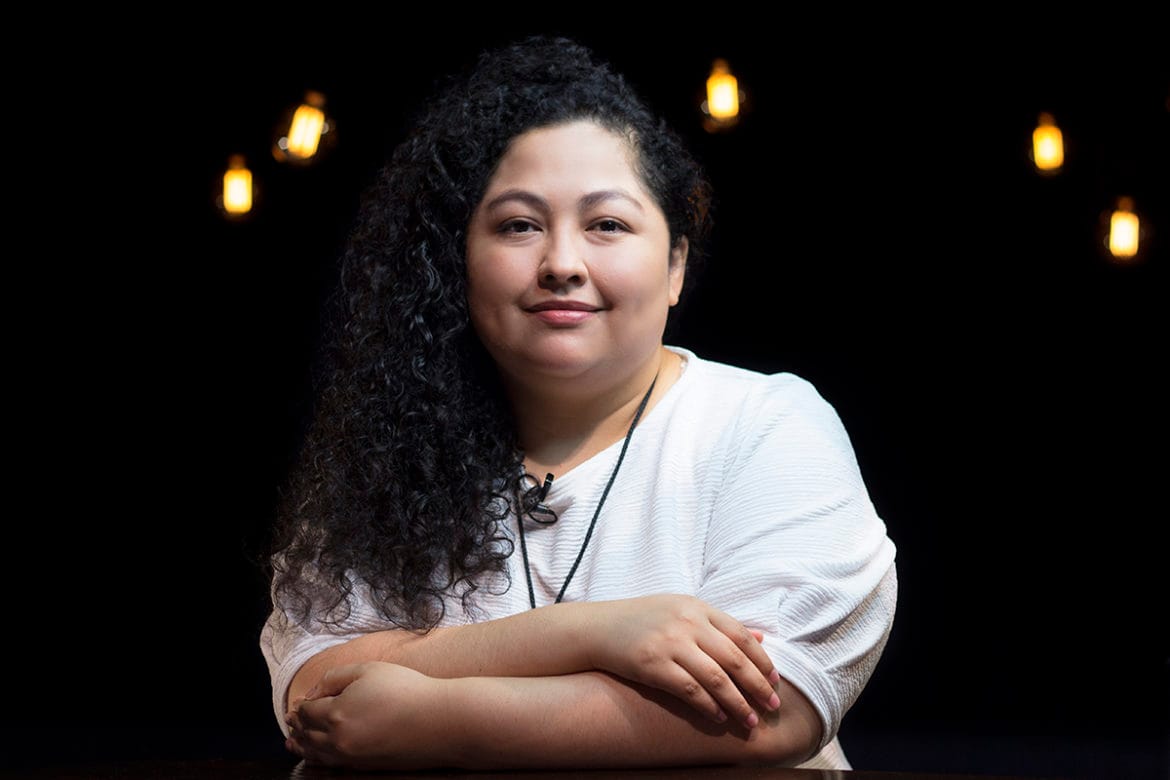
Almost 60 journalists from print, digital and community media have left El Salvador since the introduction of the May 2025 Foreign Agents Law targeting civil society and the media, according to data from the Central American Network.
Most left through regular channels, and some have applied for formal asylum processes abroad. As a result of their departures, some Salvadoran news outlets have ceased operations in the country and relocated to Costa Rica.
Some journalists have asked Cárcamo for help to get out after receiving threats or after being watched by police outside their homes. Others have written to her because they need urgent psychological support for the unresolved grief of having left their country, their children, their partners, their pets.
Then there are the journalists who are still inside El Salvador. Some are exposed in rural areas, where community reporters and land rights defenders often work without institutional protections, limited access to legal support, and closer proximity to local power structures such as police, military forces, or municipal authorities. Cárcamo, in contrast, is free and abroad, and that freedom also feels like a heavy burden. She never meant to flee, and she asks herself whether she did the right thing. She chooses to keep speaking out.
Silenced and persecuted abroad
In February 2025 the prosecutor office arrested Fidel Zavala, a member of the Human Rights and Community Defense Unit (UNIDEHC), a group of independent lawyers and community leaders. His arrest came seven months after Zavala filed a criminal complaint against the director of prisons, Osiris Luna, for alleged torture of inmates – becoming the first ex-prisoner to take legal action against Salvadoran prison authorities.
Zavala had previously spent 13 months in prison on unsubstantiated charges before a court dismissed the case against him in March 2023 and declared him innocent. He says he was subjected to arbitrary detention and torture, and that he witnessed multiple killings by prison guards, adding that he is willing to confront those responsible in court.
The same day Zavala was detained last year, the prosecutor office issued an arrest warrant against two other UNIDEHC members, lawyer Ivania Cruz and Rudy Joya, who were in Spain at the time. Cruz’s home was also raided and UNIDEHC’s offices searched.
The charges against Zavala, Cruz and Joya stem from their legal work supporting the La Floresta community, which is resisting eviction from disputed land. Authorities accused the trio of illicit association and obstruction of justice for allegedly interfering with a police operation during a search in the area.
Cruz decided not to return to El Salvador. The decision, she says, “was not heroic, but the only one possible”.
She and Joya knew they’d be arrested at the airport if they returned home. But Cruz’s mother and her children remained in El Salvador, facing threats of prosecution for alleged obstruction during the search. Because of this, the whole family had to leave the country. But their departure did not stop the persecution.
When Cruz and Joya failed to appear before the courts, the judge requested a red notice through Interpol, which sends a request to law enforcement around the world to locate and provisionally arrest a person pending extradition, surrender, or similar legal action.
Interpol issued the alert, despite the attorney general’s office having filed the indictment without the complete case file. Spanish police summoned and detained Joya for more than 30 hours while the National Court evaluated the warrant. Cruz presented herself voluntarily the following day and was detained.
Both lawyers were released on the condition of compliance with the Spanish judiciary’s precautionary measures, such as the surrender of their passports, a biweekly check-in at a court, and restrictions on movement, while it reviewed an international detention request linked to charges in El Salvador.
The UN warned against transnational repression: persecution that crosses borders and the use of international law enforcement tools to intimidate or force returns. Amnesty International is also following their case.
The Interpol alert was withdrawn in December 2025, and last month the Spanish government granted Cruz and Joya’s asylum applications, recognising the risks their work entails in El Salvador. “In my country, a human rights defender can be in danger because of her voice speaking out, and this ruling confirms that,” says Cruz.
The goal of forced exile, Cruz says, is silence. This is not an option for her. As she awaits the outcome of Salvadoran legal proceedings from more than 8,000 kilometres away in the Basque Country, she continues to speak out, denouncing and documenting the crimes committed by the country she had to leave.
“If those who report leave and stop speaking, the official narrative goes unchallenged. The task now is to leave no voids. To document from wherever we are.”
We reached out for interviews and questions about these cases to the General Attorney office, the Presidential Press Office, the Presidential Communications Office and the National Civil Police. None have answered so far.
*This is an edited version of a feature first published by FOCOS. This story is supported by the Impact Reporting program of the Institute for War & Peace Reporting (iwpr.net), helping local journalists around the world make a difference.